
William Henry Vanderbilt
Eldest son of Cornelius Vanderbilt; railroad magnate and richest American.

Unknown author · Public domain
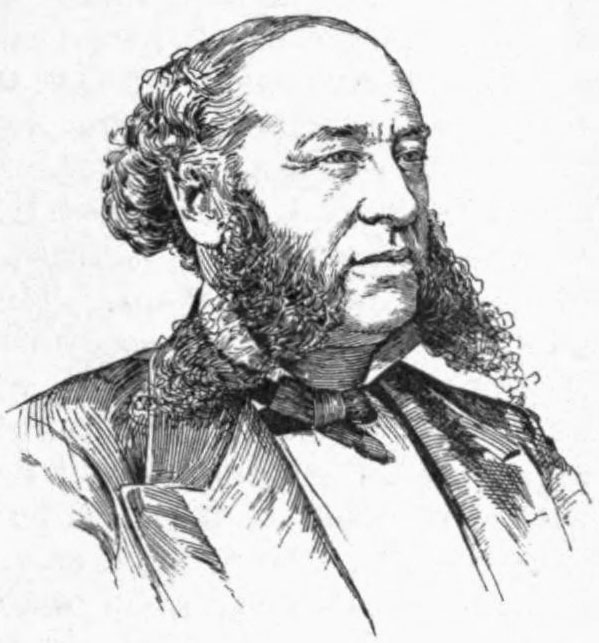
William Henry Vanderbilt (May 8, 1821 – December 8, 1885) was an American businessman and railroad magnate. Known as "Billy," he was the eldest son of Commodore Cornelius Vanderbilt, an heir to his fortune and a prominent member of the Vanderbilt family. Vanderbilt became the richest American after he took over his father's fortune in 1877 until his own death in 1885, passing on a substantial part of the fortune to his wife and children, particularly to his sons Cornelius II and William. He inherited nearly $100 million from his father. The fortune had doubled when he died fewer than nine years later.
- born
- May 8, 1821, New Brunswick, New Jersey
- died
- December 8, 1885, Manhattan, New York
- field
- Business, railroads
- nationality
- American
- known_for
- Heir to Cornelius Vanderbilt; richest American 1877–1885; 'Public be damned!' re
Verified Timeline
Lore & Background
William Henry Vanderbilt was born in New Brunswick, New Jersey, on May 8, 1821, to Commodore Cornelius Vanderbilt and Sophia Johnson. His father frequently berated and criticized him, calling his eldest son a "blockhead" and a "blatherskite." A major turning point in their relationship occurred on the family trip to Europe on the steamship Vanderbilt in 1860, after which the two became very close and Billy was given a greater role in business matters. He matriculated at Columbia College with the class of 1841 but did not graduate, according to official records. His father carefully oversaw his business training, starting him out at age 19 as a clerk in a New York banking house. After joining as an executive of the Staten Island Railway, he was made its president in 1862 and three years later was appointed vice-president of the Hudson River railway. In 1869, he was made vice-president of the New York Central and Hudson River Railroad, becoming its president in 1877. He took over for his father as president of the Lake Shore and Michigan Southern Railway, the Canada Southern Railway, and the Michigan Central Railroad at the time of Commodore's death. His railroad holdings included the Chicago, Burlington and Quincy Railroad, the Chicago and Canada Southern Railway, the Detroit and Bay City Railroad, the Hudson River Railroad, the Hudson River Bridge, the Joliet and Northern Indiana Railroad, the Michigan Midland and Canada Railroad, the New York Central and Hudson River Railroad, the New York Central Sleeping Car Company, the New York and Harlem Rail Road, the Spuyten Duyvil and Port Morris Railroad, and the Staten Island Rail-Road. In 1883, reporter John Dickinson Sherman questioned him about why he ran the limited express train: "Do your limited express trains pay or do you run them for the accommodation of the public?" Vanderbilt responded with: "Accommodation of the public? The public be damned! We run them because we have to. They do not pay." The interview was then published in the Chicago Daily News, but Vanderbilt's words were modified. Several accounts of the incident were then disseminated; the accounts vary in terms of who conducted the interview, under what circumstance and what was actually said. Vanderbilt clarified his response with a subsequent interview by the Chicago Times, saying: "Railroads are not run for the public benefit, but to pay. Incidentally, we may benefit humanity, but the aim is to earn a dividend."
In 1884, the firm Grant & Ward went bankrupt and ruined the investments of both Ulysses S. Grant and Vanderbilt, whom Grant had convinced to invest $150,000. Ferdinand Ward had operated the company as a Ponzi scheme. To pay Vanderbilt back, Grant mortgaged his American Civil War memorabilia, including his sword. Although this did not fully cover the $150,000 debt, Vanderbilt accepted the memorabilia as payment and cleared the debt. Vanderbilt later recouped Grant's other mortgaged war memorabilia and returned them all to Grant's wife, Julia Grant, after Grant's death in 1885.
Reader's Guide
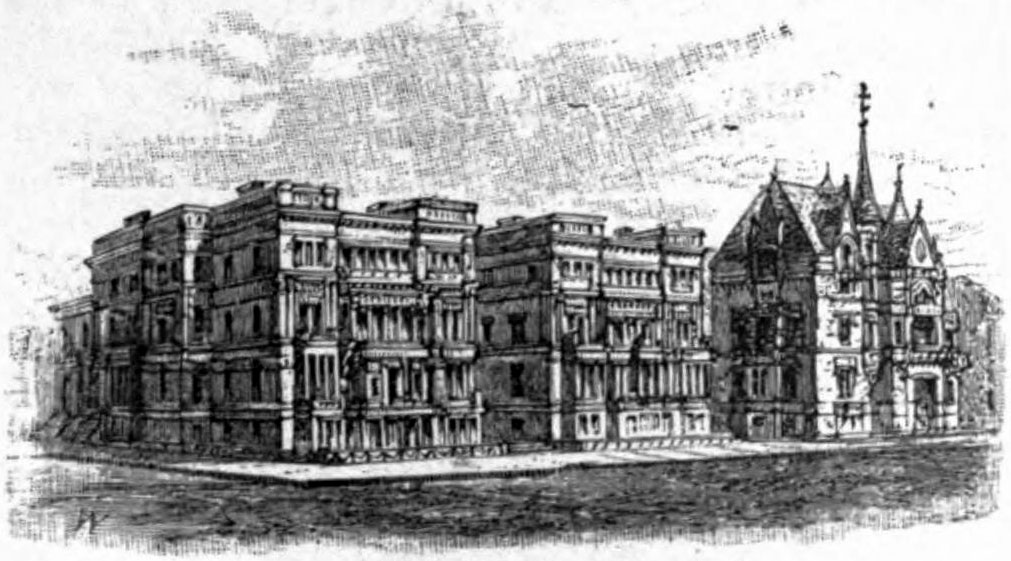
William Henry Vanderbilt's significance lies in his role as the primary heir to the Vanderbilt fortune and his expansion of the family's railroad empire. He inherited nearly $100 million from his father in 1877 and doubled that fortune by his own death fewer than nine years later, making him the richest American of his time. His management of numerous railroads, including the New York Central and Hudson River Railroad, consolidated the Vanderbilt transportation network. The "public be damned" incident, though disputed in its exact wording, became a lasting symbol of the era's corporate attitudes. His philanthropy included donations to the YMCA; funding to help establish the Metropolitan Opera; an endowment for the Columbia University College of Physicians and Surgeons; a large amount to complete the McCormick Observatory at the University of Virginia; and money for Vanderbilt University to construct the Wesley Hall building. He was an avid art enthusiast, acquiring more than 200 paintings housed in his Fifth Avenue mansion. His estate was divided among his eight surviving children and his wife, with the bulk going to his eldest two sons, Cornelius and William. His death in 1885 marked the end of the first generation of Vanderbilt wealth management, but his family continued to influence American business and philanthropy.
Did You Know?
- His father Cornelius frequently called him a 'blockhead' and a 'blatherskite' before they grew close after a family trip to Europe in 1860.
- He inherited nearly $100 million from his father in 1877 and doubled that fortune by his own death fewer than nine years later.
- In 1884, Ulysses S. Grant convinced him to invest $150,000 in Grant & Ward, which turned out to be a Ponzi scheme run by Ferdinand Ward.
- To repay the debt, Grant mortgaged his American Civil War memorabilia, including his sword; Vanderbilt later returned the items to Grant's widow.
- He donated money to complete the McCormick Observatory at the University of Virginia and funded the Wesley Hall building at Vanderbilt University.
The Vanderbilt Name in the Magnate Tradition
The Vanderbilt surname occupies a distinctive place in the long roster of figures who built vast personal empires through ownership of firms whose goods and services were consumed on a wide scale. In the category of business magnates—powerful entrepreneurs and investors who controlled entire industries through personal enterprise or dominant shareholding—the Vanderbilts are specifically identified as veterans of shipping and railroads. This placement among transportation figures sets them apart from magnates in banking, steelmaking, or newspaper publishing, yet they share the same fundamental profile: a person who, through sheer force of enterprise, came to dominate a sector whose output touched millions of lives. The term magnate itself, drawn from the Latin magnates meaning great man or great nobleman, carries an almost feudal resonance when applied to such industrial figures, suggesting a class of individuals whose economic power rivaled that of the old aristocracy.
Titles of Power: Tycoon, Magnate, Mogul
The vocabulary used to describe figures like the Vanderbilts is itself a fascinating cross-linguistic journey. The word tycoon entered English in 1857, carried back from Japan by Commodore Perry, where the original taikun served as the title for the shōgun, the great lord. President Lincoln's aides John Nicolay and John Hay playfully applied the term to their boss before it migrated into business parlance, where it stuck permanently. Mogul, meanwhile, is an English distortion of mughal, the Persian or Arabic word for Mongol, evoking the emperors of the Mughal Empire in Early Modern India and their legendary opulence, exemplified by wonders like the Taj Mahal. And magnate reaches back to Latin magnates, the plural of magnas, meaning great man or great nobleman. Together, these three labels form the trinity of honorifics most often attached to late-nineteenth- and early-twentieth-century North American industrialists, and they all carry an implicit comparison to sovereign or imperial power.
The Gilded Age and the Robber Baron Era
The Vanderbilts operated during a period that historians and commentators have labeled in several overlapping ways: the Second Industrial Revolution, the Gilded Age, or the Robber Baron Era. All three names point to the same phenomenon—a generation of North American entrepreneurs who amassed enormous fortunes in extractive industries like mining, logging, and petroleum, in transportation fields such as shipping and railroads, in manufacturing like automaking and steelmaking, in banking, and in newspaper publishing. The Vanderbilts, specifically identified as shipping and railroad veterans, sit squarely in the transportation column of this list. What distinguished this era was not merely the scale of wealth but the degree of dominance: these were not small operators but figures who controlled entire industries through personal enterprise ownership or dominant shareholding positions. Their goods and services were widely consumed, meaning the economic reach of a single magnate could shape the daily lives of an entire nation.
A Constellation of Industrial Power
The Vanderbilt name appears in the same breath as a remarkable constellation of other figures who defined industrial power across the Western world. In the historical roster, the Vanderbilts are grouped alongside oilmen John D. Rockefeller and Fred C. Koch, automobile pioneer Henry Ford, aviation pioneer Howard Hughes, shipping and railroad veterans Aristotle Onassis, Leland Stanford, Jay Gould, and James J. Hill, steel innovator Andrew Carnegie, newspaper publisher William Randolph Hearst, retail merchant Sam Walton, and bankers J. P. Morgan and Mayer Amschel Rothschild. The contemporary list extends to e-commerce entrepreneur Jeff Bezos, investor Warren Buffett, computer programmers Bill Gates and Paul Allen, technology innovator Steve Jobs, media proprietors Sumner Redstone, Ted Turner, and Rupert Murdoch, industrial entrepreneur Elon Musk, steel investor Lakshmi Mittal, telecommunications investor Carlos Slim, Virgin Group founder Sir Richard Branson, Formula 1 executive Bernie Ecclestone, and internet entrepreneurs Larry Page and Sergey Brin. The Vanderbilts, as shipping and railroad pioneers, anchor the transportation tradition within this vast lineage.
Gallery

Frequently Asked Questions
Who is William Henry Vanderbilt?
William Henry Vanderbilt, nicknamed "Billy," was an American railroad magnate born on May 8, 1821, in New Brunswick, New Jersey. He is best known as the eldest son and direct heir of Commodore Cornelius Vanderbilt, stepping into one of the largest private fortunes in U.S. history.
What role did William Henry Vanderbilt play in business?
In 1877 he assumed control of his father's sprawling railroad and shipping empire, overseeing major rail lines across the eastern United States. For the next eight years he held the distinction of being the richest person in America.
How does William Henry Vanderbilt's story end?
He died on December 8, 1885, in Manhattan, New York, at the age of 64. A substantial share of his vast wealth was passed to his wife and children, extending the Vanderbilt family's financial influence into the next generation.
Why is William Henry Vanderbilt important in business history?
His eight-year tenure as the wealthiest American (1877–1885) solidified the Vanderbilt name as a defining symbol of Gilded Age industrial dominance. His management of the inherited railroad network shaped American transportation infrastructure for a generation.
What is William Henry Vanderbilt most famous for?
Beyond his staggering wealth, he is widely linked to the notorious "Public be damned!" remark, which became shorthand for the ruthless, profit-first ethos of his era's railroad barons. He is also remembered as the heir who carried forward Cornelius Vanderbilt's legacy of aggressive, no-holds-barred business expansion.
More in Business Tycoons & Entrepreneurs 1-20
Related in Business Tycoons & Entrepreneurs
Links follow this subject's own source article.
Spotted an error? Know more?
This is a living reference — every entry is fact-audited, and reader corrections feed straight into our audit queue. Suggest an edit · See this site's audit record